Hanging a gallery wall without the guesswork
The paper-template method that professional hangers use, and why mixing the three collections works better than you would think.
A gallery wall is three or more pieces hung as a group. Done well it is the best-looking thing in a house. Done badly it is a cloud of frames at random heights with a nail hole beside every one of them. The difference is twenty minutes of preparation.
Cut paper to size first
Trace each frame onto brown paper or newspaper and cut it out. Mark where the hook sits on each template. Tape the templates to the wall with low-tack tape and move them around until the group looks right. Only then do you pick up a hammer. Every professional hanger does this, and it is the whole secret.
Keep one line constant
A group looks deliberate when something lines up. Either the centres of all the pieces sit on one horizontal line, or the top edges do, or the bottom edges do. Pick one and stick to it. Equal gaps between frames, 5 to 8 cm, do the rest. The centre of the whole group should land around 150 cm from the floor.
Odd numbers and one anchor
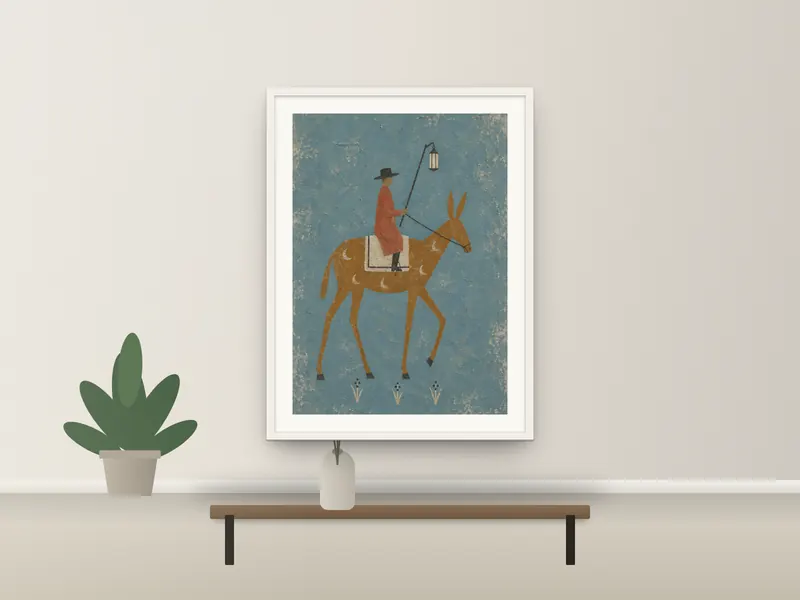
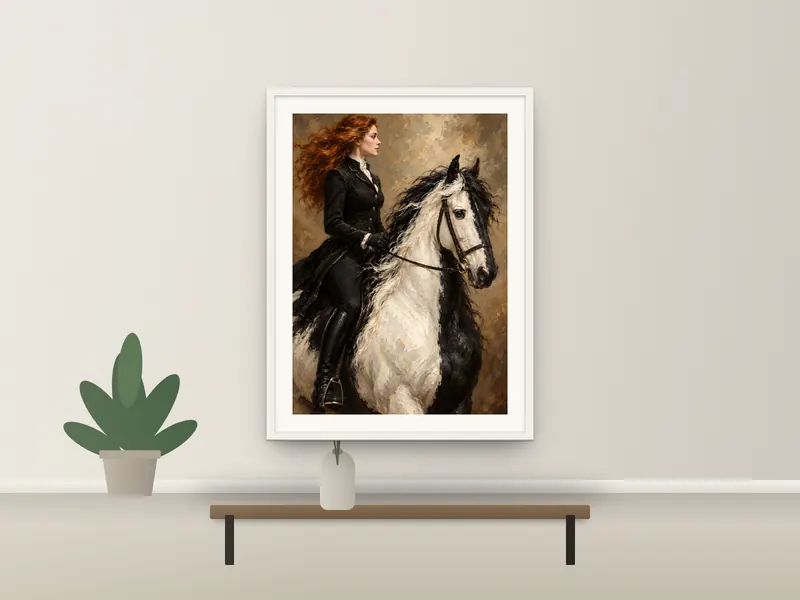
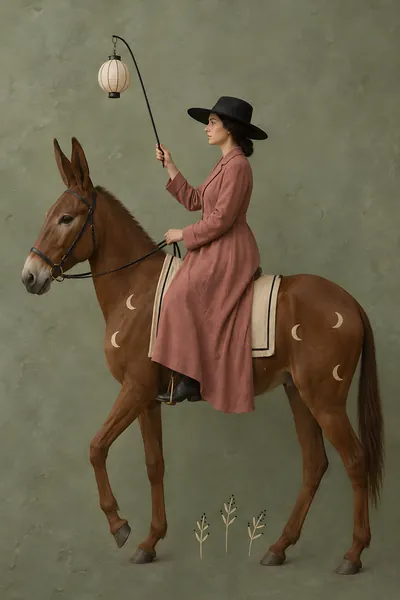
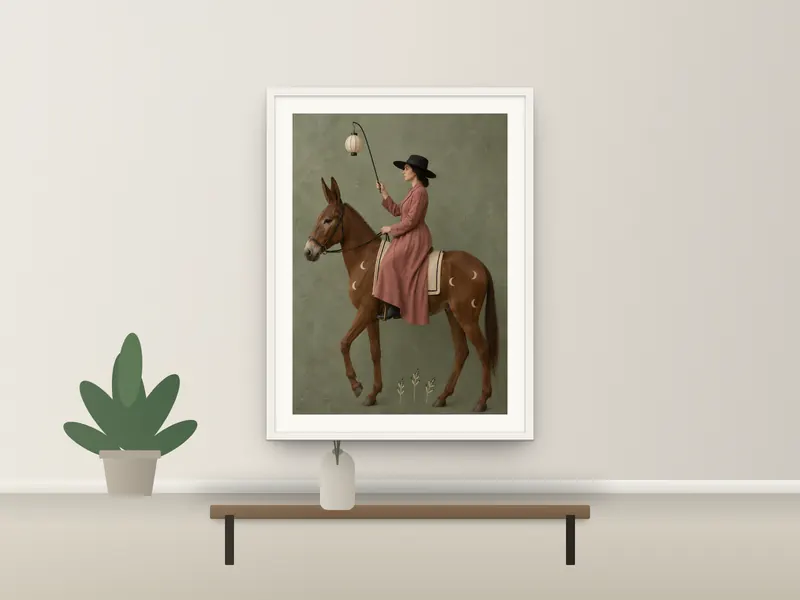
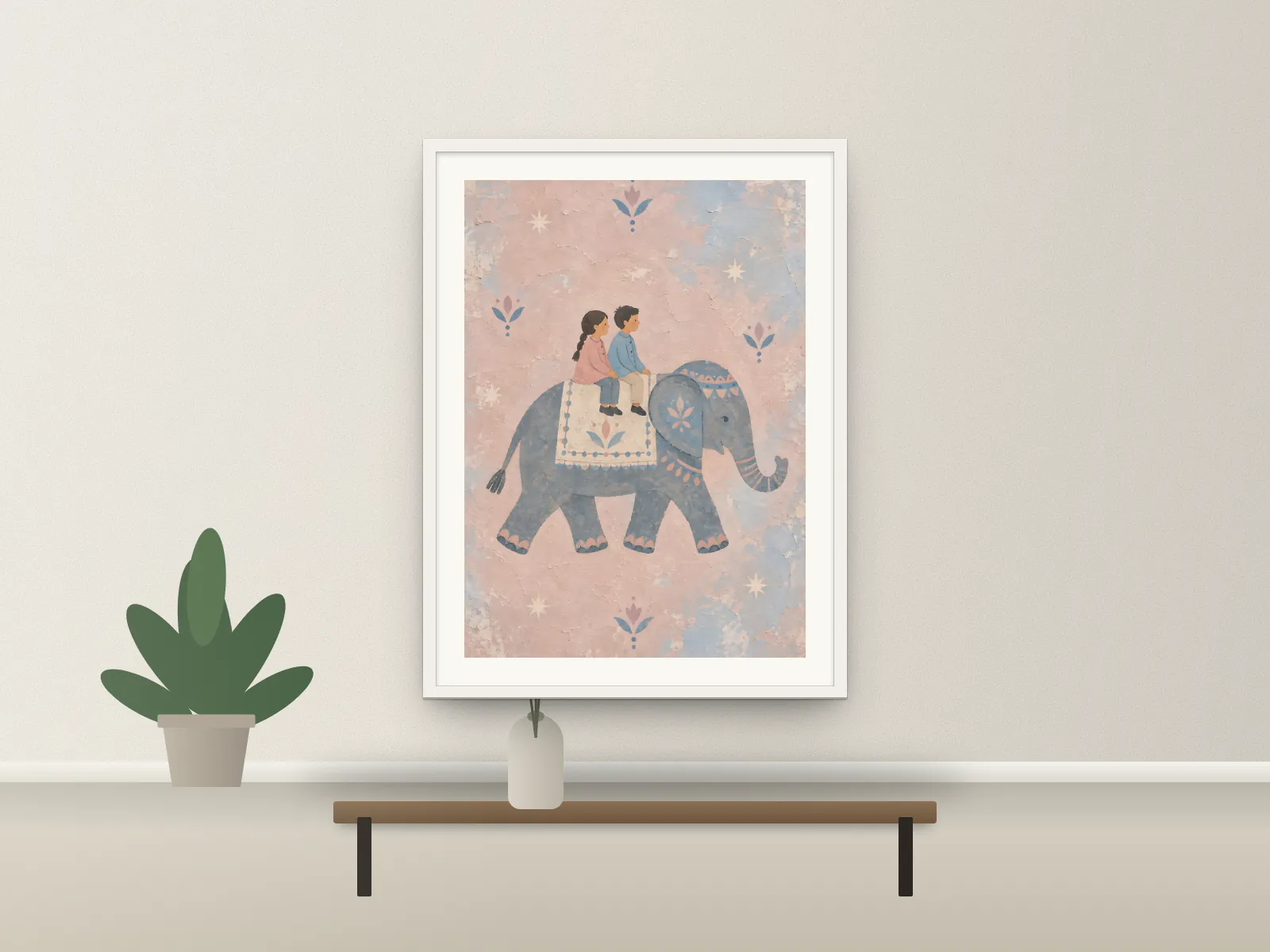
Groups of three, five or seven read better than even numbers. Choose one larger piece as the anchor and build the smaller ones around it. A framed 50 × 70 Riding Portrait flanked by two framed 30 × 40 Folk Riders is a good example: the dark, heavy anchor in the middle and two flat, chalky pieces either side.
Mixing the three collections
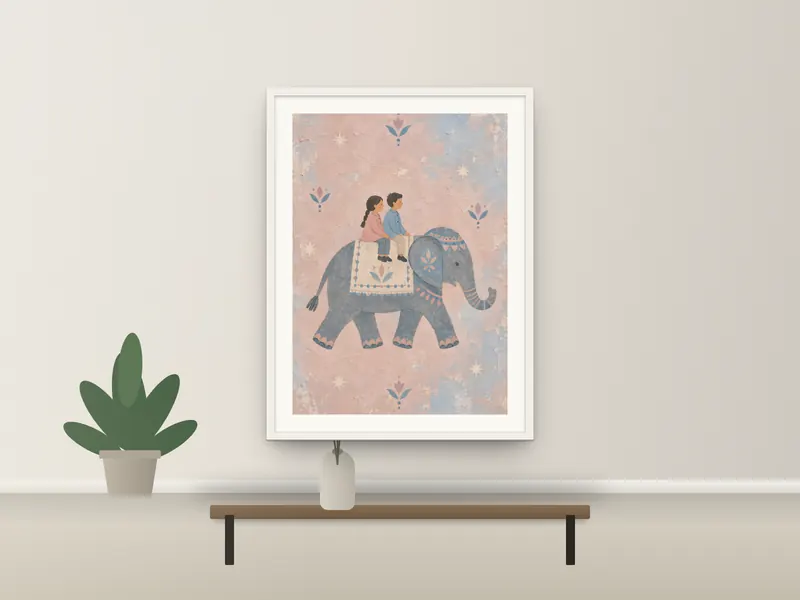
They are different on purpose. The Folk Riders are pale and flat. The Lantern Studies are dark and photographic. The Riding Portraits are thick paint on a plain ground. On the same wall they balance each other, and because every piece is a rider on an animal, they still read as one family. Keep the frames consistent across the group, black, or one wood colour for all of them, and the mix will hold together.
Two things to avoid
Do not hang art too high. It is the single commonest mistake, and once you start noticing it you will see it everywhere. And do not hang a gallery wall where sunlight hits it for hours a day. Pigment prints are fade-resistant, but no print is improved by a window in July.